
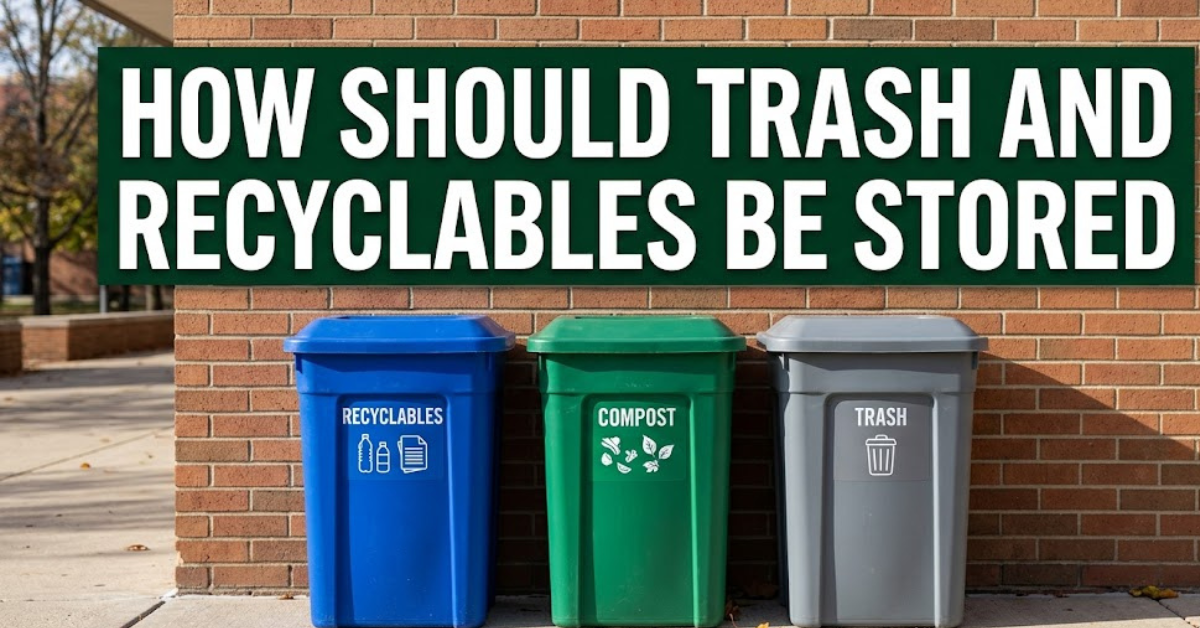
Trash management may not be the most exciting topic, but it plays a huge role in cleanliness, food safety, pest prevention, and public health. Whether you’re managing a restaurant kitchen, running a food business, or simply organizing waste at home, understanding how should trash and recyclables be stored is essential for maintaining a safe and sanitary environment.
Improper waste storage can quickly lead to:
- Bad odors
- Pest infestations
- Bacteria growth
- Cross-contamination
- Health code violations
For food handlers especially, proper trash and recycling procedures are a critical part of food safety training and health inspections.
In this guide, we’ll explain:
- How trash and recyclables should be stored
- Food safety best practices
- Restaurant waste management rules
- ServSafe recommendations
- Common mistakes to avoid
- Frequently asked questions
If you’ve searched how should trash and recyclables be stored food safety or ServSafe trash storage guidelines, this article covers everything you need to know in simple terms.
Why Proper Trash and Recycling Storage Matters
Waste storage affects more than just appearance.
Poorly managed trash can:
- Attract insects and rodents
- Spread bacteria
- Contaminate food preparation areas
- Create unpleasant working conditions
In restaurants and food-service environments, improper waste storage can even result in failed health inspections.
How Should Trash and Recyclables Be Stored?
The general rule is simple:
Trash and recyclables should be stored in clean, durable, leak-proof, and covered containers.
Containers should also be:
- Easy to clean
- Pest-resistant
- Properly labeled
- Emptied regularly
These practices help maintain hygiene and reduce contamination risks.
How Should Trash and Recyclables Be Stored Food Handlers?
For food handlers, waste management is part of core sanitation responsibilities.
Food Safety Guidelines Include
- Keeping garbage containers covered
- Removing trash regularly
- Cleaning containers frequently
- Storing waste away from food-prep areas
- Preventing overflow
Food handlers should also wash hands thoroughly after handling trash or recyclables.
How Should Trash and Recyclables Be Stored in a Restaurant?
Restaurants face stricter waste management expectations because of food safety regulations.
Proper Restaurant Waste Storage
Restaurants should:
- Use leak-proof containers
- Keep lids tightly closed
- Store dumpsters away from entrances
- Clean waste areas regularly
- Separate recyclables properly
- Remove garbage before it overflows
Health inspectors often check waste storage during routine inspections.
ServSafe Guidelines for Trash Storage
Many food workers learn sanitation standards through ServSafe training.
According to common ServSafe principles:
- Trash containers must be durable
- Containers should have tight-fitting lids
- Indoor garbage should be removed quickly
- Outdoor containers must stay covered
- Waste areas should remain clean and pest-free
The goal is always preventing contamination.
How Should Trash and Recyclables Be Stored Food Safety Standards
Food safety regulations focus heavily on contamination prevention.
Important Food Safety Practices
- Never allow trash near food preparation surfaces
- Keep waste containers clean
- Use liners when appropriate
- Avoid touching food after handling waste
- Sanitize surrounding areas regularly
Proper storage protects both employees and customers.
Best Containers for Trash and Recycling
Not all containers are equally effective.
Recommended Features
- Heavy-duty material
- Tight lids
- Wheels for mobility
- Leak resistance
- Easy-to-clean surfaces
Commercial kitchens often use industrial-grade bins designed for sanitation compliance.
Why Covered Containers Matter
Open garbage attracts:
- Flies
- Cockroaches
- Rodents
- Bacteria
Covered containers help control odors and reduce pest problems significantly.
This is one reason health codes strongly recommend that people use closed-lid waste bins.
How Often Should Trash Be Removed?
There’s no universal schedule, but trash should never be allowed to overflow.
In Food-Service Environments
Garbage may need removal:
- Multiple times daily
- At the end of every shift
- Immediately if contamination occurs
Overflowing trash creates serious sanitation risks.
Cleaning Trash Containers Properly
Even empty bins can become contaminated.
Best Cleaning Practices
- Wash containers regularly
- Use approved cleaning products
- Sanitize after leaks or spills
- Allow bins to dry fully before reuse
Dirty containers can still attract pests and bacteria.
Recycling Storage Best Practices
Recyclables also require proper handling.
Important Recycling Tips
- Rinse containers before recycling
- Separate materials correctly
- Avoid mixing food waste with recyclables
- Keep recycling bins clean and dry
Contaminated recyclables may become unusable at recycling facilities.
Outdoor Dumpster Safety Tips
Restaurants and businesses often rely on outdoor dumpsters.
Proper Dumpster Storage
- Keep lids closed
- Place dumpsters on clean surfaces
- Avoid standing water nearby
- Schedule regular waste pickup
- Clean surrounding areas frequently
Outdoor waste areas are common pest hotspots.
Common Waste Storage Mistakes
Many sanitation problems happen because of avoidable mistakes.
Frequent Errors Include
- Leaving trash uncovered
- Allowing bins to overflow
- Storing garbage near food
- Forgetting to clean containers
- Ignoring recycling contamination
Small issues can quickly become major health hazards.
How Trash Storage Helps Prevent Pests
Rodents and insects search constantly for food sources.
Improperly stored waste gives them:
- Food
- Shelter
- Moisture
Good trash management is one of the most effective pest-control strategies available.
Importance of Employee Training
Every employee handling food should understand proper waste procedures.
Training Should Cover
- Waste disposal routines
- Handwashing after trash handling
- Recycling separation rules
- Spill cleanup procedures
- Sanitation standards
Consistency is essential in food safety.
Environmental Benefits of Proper Recycling
Good recycling practices help reduce:
- Landfill waste
- Pollution
- Resource consumption
Restaurants and businesses that recycle properly can improve sustainability while maintaining sanitation standards.
FAQs About How Trash and Recyclables Should Be Stored
How should trash and recyclables be stored?
Store them in clean, durable, leak-proof, and covered containers.
How should trash and recyclables be stored food handlers?
Food handlers should keep waste containers covered, clean, and away from food-prep areas.
Why must garbage containers have lids?
Lids help prevent pests, odors, and contamination.
How often should restaurant trash be removed?
Staff should remove trash regularly and never allow it to overflow.
Should recyclables be cleaned before storage?
Yes. Rinsing recyclable containers helps reduce contamination and odors.
What happens if trash is stored improperly?
Improper storage can attract pests, spread bacteria, and lead to health code violations.
What does ServSafe recommend for trash storage?
ServSafe recommends that staff use durable, covered, leak-proof containers and clean and empty them regularly.
Conclusion
Understanding how should trash and recyclables be stored is a key part of maintaining sanitation, food safety, and overall cleanliness. Whether at home or in a restaurant, proper waste management helps prevent contamination, control pests, and create a healthier environment for everyone.
For food handlers especially, following proper trash and recycling procedures is more than a recommendation — it’s an essential part of safe food service operations. Using covered containers, cleaning bins regularly, and removing waste promptly can make a major difference in preventing health risks and maintaining compliance with food safety standards.
Good waste management may seem simple, but consistent habits are what keep kitchens, businesses, and communities clean and safe.