Walk into any classroom, and you’ll immediately notice something important: no two students learn exactly the same way. Some grasp concepts quickly, while others need additional support and practice. Some thrive through hands-on activities, while others learn best through reading, discussion, or visual aids. This diversity is what makes teaching both rewarding and challenging.
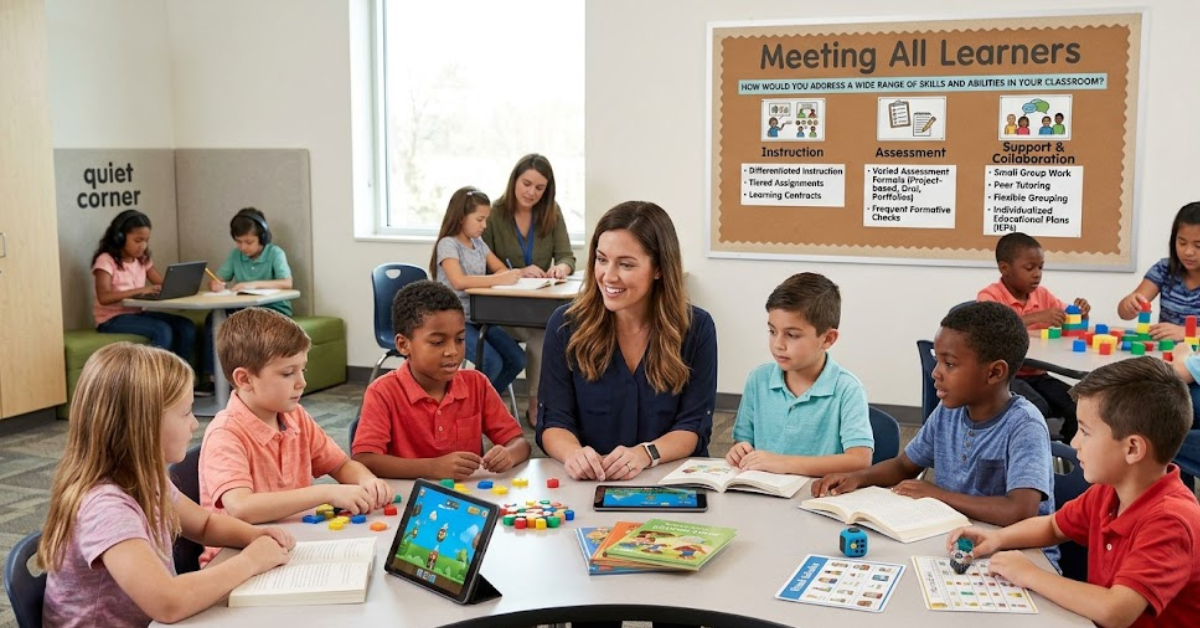
So, how would you address a wide range of skills and abilities in your classroom? The answer lies in creating an inclusive learning environment that recognizes individual differences while providing every student with opportunities to succeed. By using differentiated instruction, flexible teaching methods, and ongoing assessment, educators can meet the needs of diverse learners without sacrificing academic standards.
In this article, we’ll explore practical strategies teachers can use to support students with varying abilities, learning styles, strengths, and educational needs.
Why Addressing Diverse Learning Needs Matters
Every classroom includes students with different:
- Academic abilities
- Learning styles
- Background knowledge
- Interests and motivations
- Language proficiency levels
- Social and emotional needs
Ignoring these differences can leave some students feeling overwhelmed while others become disengaged due to a lack of challenge.
When teachers intentionally address diverse skills and abilities, they create a classroom where all students feel valued, supported, and capable of learning.
Benefits of Inclusive Teaching
Addressing diverse learner needs can:
- Improve student engagement
- Increase academic achievement
- Build student confidence
- Promote collaboration
- Reduce learning gaps
- Foster a positive classroom culture
An inclusive classroom benefits everyone, not just students who require additional support.
Use Differentiated Instruction to Meet Individual Needs
One of the most effective answers to the question how would you address a wide range of skills and abilities in your classroom? is differentiated instruction.
Differentiated instruction involves adjusting teaching methods, materials, and assessments to accommodate varying student needs.
Differentiate Content
Content refers to what students learn.
Teachers can modify content by:
- Providing reading materials at different levels
- Offering audio and visual resources
- Using graphic organizers
- Presenting concepts in multiple formats
This ensures all students can access essential learning objectives.
Differentiate Process
The process refers to how students learn.
Examples include:
- Small-group instruction
- Hands-on activities
- Peer collaboration
- Independent learning tasks
- Interactive discussions
Providing multiple pathways to learning helps students engage with content in ways that suit their strengths.
Differentiate Product
A product is how students demonstrate understanding.
Instead of requiring every student to complete the same assignment, teachers might allow:
- Written reports
- Presentations
- Videos
- Posters
- Creative projects
Offering choice encourages creativity and accommodates different abilities.
Create a Positive and Inclusive Classroom Environment
Students learn best when they feel safe, respected, and supported.
An inclusive classroom celebrates diversity and encourages every student to participate.
Build Strong Relationships
Getting to know students personally helps teachers understand their:
- Strengths
- Challenges
- Interests
- Learning preferences
Strong teacher-student relationships often lead to greater engagement and improved academic performance.
Foster a Growth Mindset
Encourage students to view mistakes as learning opportunities rather than failures.
Teachers can reinforce a growth mindset by:
- Praising effort
- Celebrating progress
- Encouraging perseverance
- Modeling resilience
This approach helps students develop confidence in their abilities.
Use Flexible Grouping Strategies
Not every lesson should be taught to the whole class in the same way.
Flexible grouping allows teachers to organize students based on:
- Skill level
- Learning goals
- Interests
- Learning styles
Types of Flexible Groups
Small Skill-Based Groups
Students receive targeted instruction based on their academic needs.
Mixed-Ability Groups
Students learn from one another while developing teamwork and communication skills.
Independent Learning Stations
Students work at their own pace while focusing on specific learning objectives.
Flexible grouping helps ensure that instruction remains responsive and personalized.
Incorporate Multiple Teaching Methods
Students process information differently.
Using a variety of instructional strategies helps reach a broader range of learners.
Effective Teaching Approaches
Consider incorporating:
- Visual learning aids
- Classroom discussions
- Demonstrations
- Educational technology
- Project-based learning
- Cooperative learning activities
- Hands-on experiences
The more ways students can engage with content, the greater the likelihood that learning will be meaningful.
Leverage Technology to Support Diverse Learners
Educational technology provides powerful tools for personalization.
Digital resources can help students learn at their own pace and access content in ways that suit their needs.
Helpful Technology Tools
Examples include:
- Learning management systems
- Interactive educational apps
- Speech-to-text software
- Online quizzes
- Video lessons
- Adaptive learning platforms
Technology can make learning more accessible and engaging for students with different abilities.
Use Ongoing Assessment to Guide Instruction
Effective teaching requires continuous feedback.
Regular assessment helps teachers identify:
- Student strengths
- Learning gaps
- Areas requiring intervention
- Opportunities for enrichment
Types of Formative Assessment
Teachers can use:
- Exit tickets
- Classroom observations
- Quizzes
- Peer assessments
- Student reflections
These tools provide valuable insights that help inform instructional decisions.
Support Students with Additional Learning Needs
Some students may require accommodations or specialized support.
Teachers should collaborate with:
- Special education professionals
- Support staff
- Parents and guardians
- School counselors
Examples of Classroom Accommodations
- Extended time on assignments
- Alternative assessment formats
- Visual schedules
- Preferential seating
- Simplified instructions
Providing appropriate support helps ensure equitable learning opportunities.
Encourage Student Choice and Ownership
Students become more motivated when they have a voice in their learning.
Providing choices can increase engagement and foster independence.
Ways to Promote Student Ownership
Allow students to choose:
- Project topics
- Reading materials
- Presentation formats
- Learning activities
When students feel empowered, they are more likely to take responsibility for their academic success.
Promote Collaboration and Peer Learning
Students can learn a great deal from one another.
Collaborative learning encourages communication, problem-solving, and critical thinking skills.
Benefits of Peer Learning
- Increased engagement
- Improved social skills
- Greater confidence
- Deeper understanding of concepts
Structured collaboration helps students appreciate different perspectives and strengths.
Key Strategies for Addressing Diverse Skills and Abilities
To summarize, teachers can effectively support diverse learners by:
- Using differentiated instruction
- Creating an inclusive classroom environment
- Implementing flexible grouping
- Incorporating varied teaching methods
- Leveraging educational technology
- Conducting ongoing assessments
- Providing accommodations when necessary
- Encouraging student choice
- Promoting collaboration and peer learning
Together, these strategies create a learning environment where every student has the opportunity to succeed.
Frequently Asked Questions (FAQs)
Why is it important to address different skills and abilities in the classroom?
Students learn differently. Addressing diverse needs helps improve engagement, achievement, confidence, and overall learning outcomes.
How would you address a wide range of skills and abilities in your classroom?
Teachers can use differentiated instruction, flexible grouping, varied teaching strategies, ongoing assessment, and individualized support to meet diverse student needs.
What is differentiated instruction?
Differentiated instruction is a teaching approach that adapts content, processes, and assessments to accommodate students’ varying abilities and learning preferences.
How can technology help support diverse learners?
Technology provides personalized learning experiences, accessibility tools, interactive resources, and adaptive programs that help meet individual learning needs.
What role does assessment play in supporting diverse students?
Assessment helps teachers identify strengths, weaknesses, and learning gaps, allowing them to adjust instruction and provide targeted support.
How can teachers create an inclusive classroom environment?
Teachers can build positive relationships, celebrate diversity, encourage participation, establish clear expectations, and foster a culture of respect and belonging.
Conclusion
So, how would you address a wide range of skills and abilities in your classroom? The most effective approach involves recognizing that every student learns differently and designing instruction that reflects those differences. Through differentiated instruction, flexible teaching methods, inclusive practices, and ongoing assessment, educators can create a classroom where all learners feel supported and challenged.
The goal isn’t to teach every student in exactly the same way—it’s to provide multiple pathways to success. By embracing diversity in learning and focusing on individual growth, teachers can help every student reach their full potential while building a positive, engaging, and inclusive learning environment.
For more insights on classroom management, differentiated instruction, and student engagement strategies, explore additional educational resources and professional development opportunities.