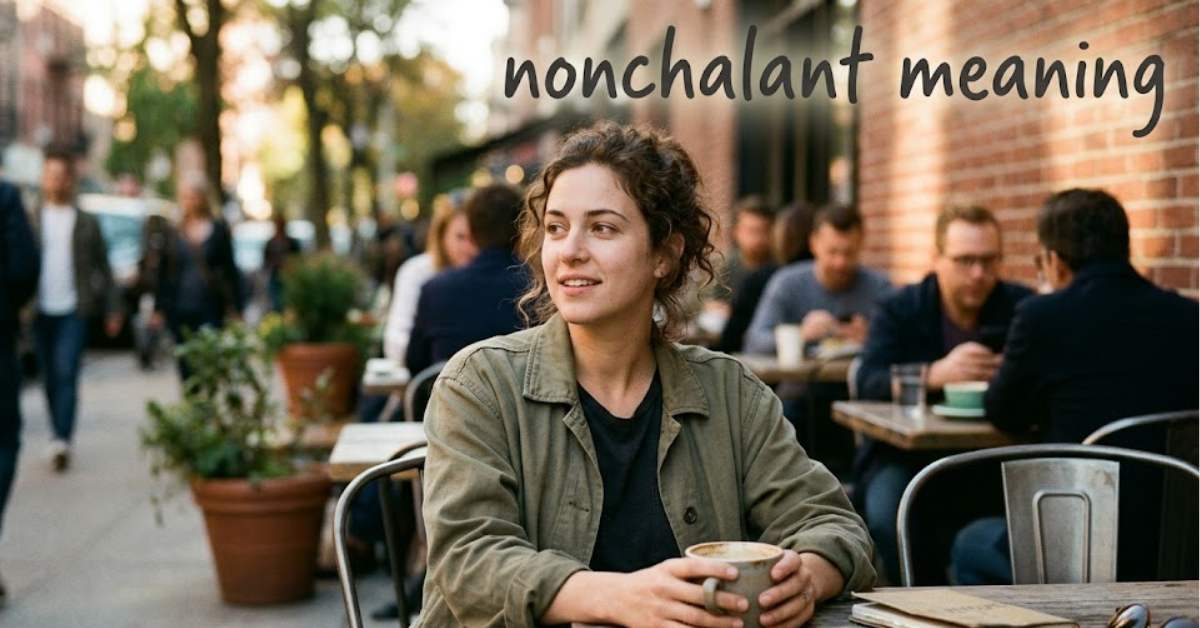
Have you ever heard someone described as cool, calm, and completely unbothered? Chances are the word nonchalant was involved. While the term is commonly used in conversations, social media posts, and relationship discussions, many people still wonder about the exact nonchalant meaning and whether it has a positive or negative connotation.
In simple terms, being nonchalant means appearing relaxed, unconcerned, or unaffected by something that might normally cause excitement, worry, or stress. However, the word can take on different meanings depending on the context, especially when discussing friendships, dating, or modern slang.
This guide explores the nonchalant meaning definition, its origins, examples, relationship implications, slang usage, and practical ways to use it correctly in everyday English.
Nonchalant Meaning Definition
The official nonchalant meaning in English is:
Feeling or appearing casually calm and relaxed; not displaying anxiety, concern, or excitement.
A nonchalant person often seems unfazed by situations that might make others emotional or nervous.
Simple Definition
Nonchalant = Calm, unconcerned, and seemingly unbothered.
Example
- She remained nonchalant even after receiving unexpected news.
- He gave a nonchalant shrug when asked about the mistake.
In both examples, the individuals appear relaxed rather than emotionally reactive.
Where Does the Word Nonchalant Come From?
The word nonchalant originates from French.
It comes from:
- Non = not
- Chaloir = to concern or matter
Combined, the term essentially means “not concerned.”
Over time, English adopted the word to describe people who appear indifferent, relaxed, or emotionally unaffected.
Nonchalant Meaning in English
When used in everyday English, nonchalant typically describes a person’s attitude, behavior, or reaction.
Someone who is nonchalant may:
- Stay calm under pressure
- Avoid overreacting
- Appear confident
- Show little concern about outcomes
Examples in Daily Life
- The athlete appeared nonchalant before the championship game.
- She handled the stressful situation with a nonchalant attitude.
- His nonchalant response surprised everyone.
The key characteristic is a sense of ease and composure.
Being Nonchalant Meaning: More Than Just Being Calm
The phrase being nonchalant meaning often extends beyond simple calmness.
A nonchalant person may:
Appear Confident
Confidence often looks effortless.
For example:
- A speaker walks onto stage without visible nervousness.
- An employee handles criticism calmly.
Seem Emotionally Detached
In some situations, nonchalance can be interpreted as emotional distance.
For example:
- Not reacting strongly to good news.
- Showing little concern during important discussions.
Stay Relaxed During Stress
Many people admire nonchalant individuals because they remain composed under pressure.
Nonchalant Meaning Slang
On social media and among younger generations, the nonchalant meaning slang has evolved slightly.
Today, calling someone “nonchalant” often implies that they:
- Act like they don’t care
- Hide their feelings
- Play it cool
- Avoid showing excitement
Slang Examples
- “He’s trying to act nonchalant, but he definitely likes her.”
- “Stop being so nonchalant and tell us how you really feel.”
- “She always acts nonchalant on social media.”
In slang, the word sometimes suggests someone is intentionally concealing their emotions.
Nonchalant Meaning in Relationship Contexts
One of the most searched phrases online is nonchalant meaning in relationship.
That’s because the word frequently appears in dating conversations.
What Does Being Nonchalant Mean in a Relationship?
In relationships, being nonchalant usually means:
- Not expressing emotions openly
- Appearing emotionally distant
- Acting casual about important matters
- Avoiding displays of vulnerability
Positive Side
A nonchalant partner may:
- Stay calm during disagreements
- Avoid unnecessary drama
- Handle conflict rationally
Negative Side
Excessive nonchalance can sometimes create problems.
A partner may appear:
- Uninterested
- Detached
- Unavailable emotionally
- Indifferent to relationship needs
This is why context matters.
Is Being Nonchalant Good or Bad?
The answer depends on the situation.
When Nonchalance Is Positive
Being nonchalant can be beneficial when it involves:
- Emotional stability
- Confidence
- Stress management
- Professional composure
Examples:
- Staying calm during an interview
- Remaining collected during emergencies
- Handling criticism gracefully
When Nonchalance Is Negative
It can become problematic when it leads to:
- Emotional avoidance
- Poor communication
- Lack of empathy
- Relationship misunderstandings
Examples:
- Ignoring a partner’s feelings
- Appearing indifferent to important issues
Common Signs of a Nonchalant Person
People often wonder how to identify nonchalant behavior.
Some common traits include:
- Calm demeanor
- Minimal emotional reactions
- Relaxed body language
- Quiet confidence
- Unbothered attitude
- Limited outward excitement
However, appearances can be misleading. A person may seem nonchalant while experiencing strong emotions internally.
Nonchalant vs Similar Words
Understanding related words helps clarify the meaning.
Nonchalant vs Confident
- Nonchalant = unconcerned or relaxed
- Confident = self-assured and certain
A person can be both.
Nonchalant vs Indifferent
- Nonchalant = calm and unconcerned
- Indifferent = lacking interest or concern
Indifference tends to carry a more negative meaning.
Nonchalant vs Carefree
- Nonchalant = relaxed response to situations
- Carefree = free from worries generally
Carefree often sounds more positive.
Synonyms for Nonchalant
Depending on the context, alternatives include:
- Relaxed
- Calm
- Cool
- Collected
- Composed
- Unruffled
- Easygoing
- Casual
- Unconcerned
- Carefree
Antonyms of Nonchalant
Words with opposite meanings include:
- Anxious
- Nervous
- Concerned
- Excited
- Agitated
- Worried
- Emotional
- Distressed
How to Use Nonchalant Correctly in a Sentence
Here are practical examples.
Professional Settings
- The CEO remained nonchalant despite market uncertainty.
- She gave a nonchalant response to the criticism.
Relationships
- His nonchalant attitude made her question his feelings.
- She tried to appear nonchalant after the breakup.
Everyday Conversations
- He looked nonchalant while waiting for the results.
- Her nonchalant smile suggested everything was under control.
Common Mistakes About the Word Nonchalant
Mistake #1: Assuming It Means Lazy
Nonchalant doesn’t mean lazy.
A person can be highly productive while appearing calm and composed.
Mistake #2: Thinking It Always Means Someone Doesn’t Care
Sometimes nonchalant people care deeply but choose not to show strong emotions.
Mistake #3: Confusing Confidence With Arrogance
A nonchalant attitude can look confident, but confidence isn’t the same as arrogance.
Why Nonchalant Is Popular on Social Media
The word has become increasingly popular online because modern culture often celebrates the idea of “playing it cool.”
You’ll frequently see discussions about:
- Nonchalant men
- Nonchalant women
- Nonchalant texting habits
- Nonchalant dating behavior
In these contexts, the term often refers to people who intentionally avoid appearing overly invested or emotional.
Frequently Asked Questions
What is the nonchalant meaning?
Nonchalant means appearing calm, relaxed, and unconcerned, especially in situations that might make others anxious or excited.
What is the nonchalant meaning in English?
In English, nonchalant describes someone who seems unbothered, composed, and casually calm.
What is the nonchalant meaning slang?
In slang, nonchalant often refers to someone acting cool, hiding their feelings, or pretending not to care.
What does being nonchalant mean?
Being nonchalant means maintaining a relaxed attitude and showing little outward concern or emotional reaction.
What is the nonchalant meaning in relationship discussions?
In relationships, nonchalant often refers to someone who appears emotionally reserved, detached, or casual about their feelings.
Is being nonchalant attractive?
Many people find nonchalance attractive because it can signal confidence and emotional control. However, excessive nonchalance may be perceived as disinterest.
Is nonchalant positive or negative?
It can be either. The meaning depends on context. Calm confidence is generally positive, while emotional detachment can be viewed negatively.
Conclusion
Understanding the nonchalant meaning goes beyond simply knowing a dictionary definition. At its core, the word describes someone who appears calm, composed, and unconcerned, even in situations that might cause stress or excitement. Whether you’re exploring the nonchalant meaning in English, the nonchalant meaning slang, or the nonchalant meaning in relationship conversations, the key idea remains the same: an outward display of ease and emotional control.
While being nonchalant can project confidence and maturity, balance is important. Too much nonchalance may come across as indifference or emotional distance. By understanding the nuances of the term, you’ll be better equipped to use it correctly and recognize it in everyday life.
Interested in learning more about popular English expressions and commonly misunderstood words? Explore related language guides to expand your vocabulary and communicate with greater clarity and confidence.