
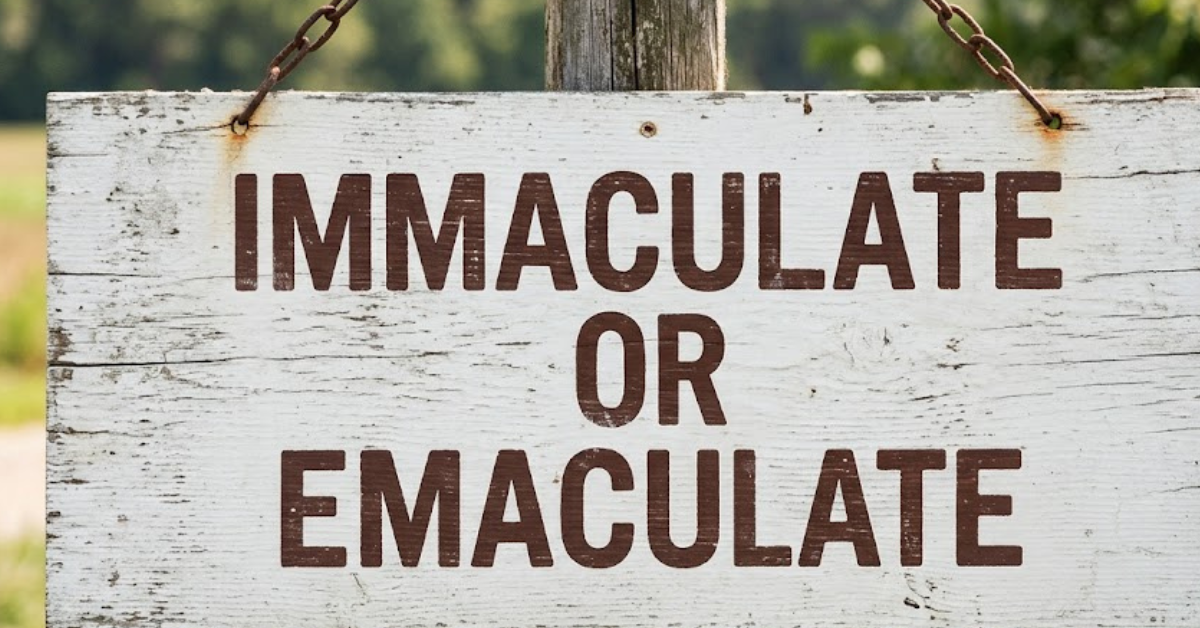
English spelling can be surprisingly tricky, especially when two words sound almost identical. One common confusion people search for online is immaculate or emaculate. Because the words sound similar when spoken quickly, many people accidentally type or pronounce the wrong version.
If you’ve ever wondered about immaculate vs emaculate or searched for the difference between emaculate and immaculate, you’re not alone. In this guide, we’ll break down the correct spelling, meanings, pronunciation, examples, and common mistakes in a simple and easy-to-understand way.
Immaculate or Emaculate: Which One Is Correct?
The correct English word is:
Immaculate
The word emaculate is generally considered a misspelling or typo and is not recognized as a standard English word in modern dictionaries.
So when comparing:
- immaculate or emaculate
- emmaculate or immaculate
the correct spelling is always immaculate.
What Does Immaculate Mean?
The word immaculate describes something that is:
- Extremely clean
- Perfectly neat
- Flawless or without mistakes
- Pure or spotless
It’s commonly used to describe appearance, organization, cleanliness, or perfection.
Examples:
- “Her house was absolutely immaculate.”
- “He arrived wearing an immaculate suit.”
- “The hotel room looked spotless and organized.”
The word often carries a strong sense of precision and perfection.
Emaculate Meaning Explained
Many people search for emaculate meaning, but technically, “emaculate” is not considered a correct English word.
Why people use it:
Usually because of:
- Pronunciation confusion
- Typing errors
- Mishearing the word “immaculate”
- Autocorrect mistakes
In most cases, when someone writes “emaculate,” they actually mean “immaculate.”
Immaculate vs Emaculate: Main Difference
Here’s the simplest comparison:
| Word | Correct? | Meaning |
| Immaculate | Yes | Perfectly clean or flawless |
| Emaculate | No | Common misspelling |
That’s the key difference between the two.
Why People Confuse Immaculate and Emaculate
There are several reasons why this spelling mistake happens frequently.
1. Similar pronunciation
In fast speech, “immaculate” may sound like “emaculate.”
2. Double-letter confusion
Words with repeated letters often cause spelling mistakes.
3. Typing habits
Quick typing and autocorrect errors contribute to the confusion.
4. Rare word usage
Since “immaculate” isn’t used every day by everyone, people may forget the exact spelling.
How to Spell Immaculate Correctly
The correct spelling is:
I-M-M-A-C-U-L-A-T-E
A helpful memory trick:
“Immaculate starts with ‘imma’ and means something incredibly clean or perfect.”
Breaking the word into parts often helps people remember it more easily.
Common Uses of the Word Immaculate
The word appears in many situations.
Cleanliness
- Immaculate kitchen
- Immaculate bedroom
- Immaculate workspace
Fashion and Appearance
- Immaculate outfit
- Immaculate makeup
- Immaculate presentation
Performance or Quality
- Immaculate performance
- Immaculate attention to detail
- Immaculate craftsmanship
It’s usually associated with excellence and perfection.
Synonyms for Immaculate
If you want alternatives to the word, here are some common synonyms:
- Spotless
- Perfect
- Flawless
- Pristine
- Neat
- Polished
- Clean
- Elegant
These words carry similar meanings depending on context.
Emmaculate or Immaculate: Another Common Mistake
Some people also search:
- emmaculate or immaculate
The spelling “emmaculate” is also incorrect.
The only standard English spelling is:
immaculate
Both “emaculate” and “emmaculate” are considered misspellings.
Examples of Correct Usage
Correct:
- “The restaurant was immaculate.”
- “She maintained an immaculate appearance.”
- “The car looked brand new and spotless.”
Incorrect:
- “The house was emaculate.”
- “He kept his desk emmaculate.”
Using the correct spelling makes writing look more polished and professional.
Why Correct Spelling Matters
Spelling accuracy improves:
- Professional writing
- Academic work
- Online communication
- Search clarity
- Credibility and readability
Even small spelling mistakes can affect how polished your writing appears.
FAQs About Immaculate or Emaculate
1. Is it immaculate or emaculate?
“Immaculate” is the correct spelling.
2. What does immaculate mean?
It means perfectly clean, flawless, neat, or spotless.
3. Is emaculate a real word?
No, it is generally considered a misspelling of “immaculate.”
4. Why do people spell immaculate incorrectly?
Because the pronunciation can sound similar to “emaculate” in casual speech.
5. What is the difference between emaculate and immaculate?
“Immaculate” is a correct English word, while “emaculate” is not standard English.
Conclusion
Understanding the difference between immaculate or emaculate is actually straightforward once you know the correct spelling. Immaculate is the proper English word used to describe something perfectly clean, flawless, or exceptionally neat, while “emaculate” and “emmaculate” are simply common spelling mistakes.
Because the words sound similar when spoken quickly, many people accidentally confuse them online or in writing. Remembering the correct spelling helps improve communication, professionalism, and overall writing accuracy.