Have you ever typed “verbage” and watched your spell checker immediately flag it? If so, you’re not alone. The debate around verbage vs verbiage is surprisingly common, especially among writers, students, professionals, and anyone who spends time communicating in English.
The truth is that many people use verbage when they actually mean verbiage. While the two words sound similar, only one is considered the standard spelling in modern English. Understanding the difference can help you write more confidently and avoid a common language mistake.
In this guide, we’ll break down verbage vs verbiage, explore the verbage definition, explain which form dictionaries recognize, and show you how to use the correct word in everyday writing.
What Is the Difference Between Verbage and Verbiage?
The simplest answer is:
- Verbiage is the standard, dictionary-recognized word.
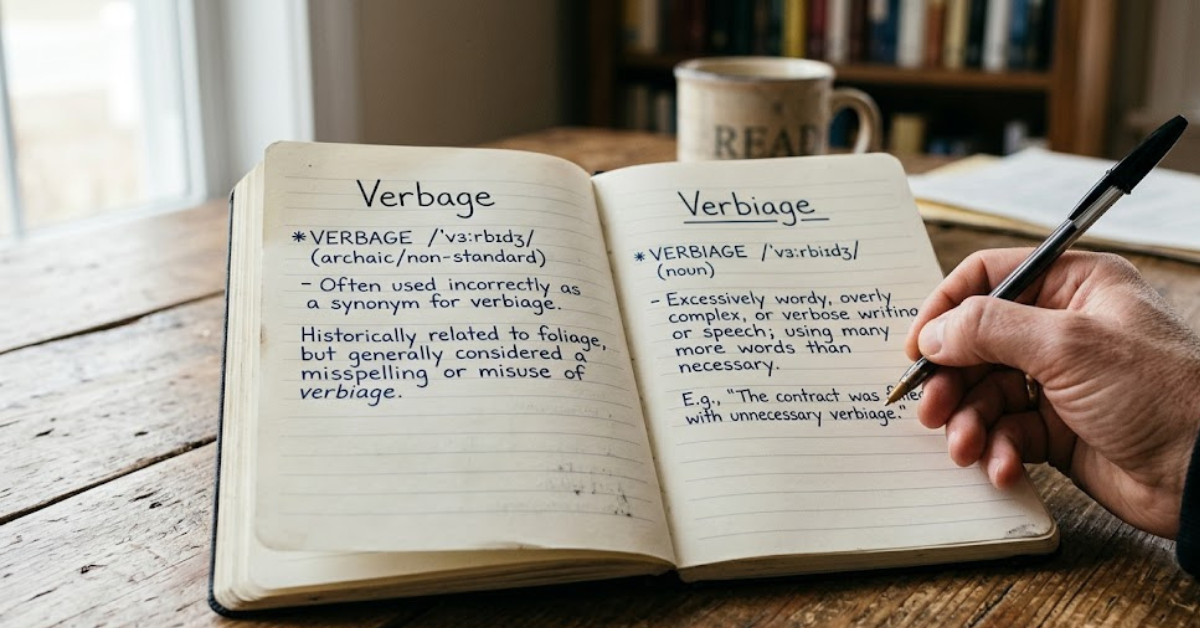
- Verbage is generally considered a misspelling or nonstandard variant.
When people search for verbiage or verbage, they’re usually trying to determine which version is correct. In formal writing, academic papers, business communication, and professional content, verbiage is the preferred spelling.
Quick Answer
Verbiage = Correct
Verbage = Usually considered incorrect or nonstandard
Verbiage Definition
The word verbiage refers to an excessive amount of words or overly wordy language. Depending on the context, it can also simply mean the wording used in a document, statement, or piece of writing.
Dictionary Meaning of Verbiage
Verbiage generally refers to:
- Excessive or unnecessary words.
- Wordiness in speech or writing.
- The specific wording of a document or text.
Examples of Verbiage
- The report contained too much verbiage and could have been shorter.
- Legal contracts often include complex verbiage.
- The editor removed unnecessary verbiage to improve readability.
In these examples, verbiage refers either to wordiness or the wording itself.
Verbage Definition: Is It a Real Word?
One reason people search for verbage definition is that they hear the word spoken frequently.
Technically, verbage appears in some dictionaries as a variant spelling because of its widespread use. However, language experts and style guides overwhelmingly recommend using verbiage instead.
Why Does “Verbage” Exist?
The popularity of verbage likely comes from:
- Pronunciation similarities
- Informal speech habits
- Confusion with other English words ending in “-age”
Over time, enough people used verbage that some dictionaries acknowledged it as a variant. However, it remains less accepted than verbiage.
Verbiage or Verbage: Which Should You Use?
If you’re writing anything intended for publication or professional audiences, the answer is clear:
Use Verbiage
Examples:
- The legal verbiage was difficult to understand.
- We simplified the marketing verbiage.
- The contract’s verbiage needs revision.
Avoid Verbage
Although some readers may understand it, using verbage can appear unprofessional and may distract from your message.
Why People Confuse Verbage vs Verbiage
English is filled with words that sound alike but have different spellings. The confusion between verbage vs verbiage often stems from pronunciation.
When spoken aloud, many people pronounce verbiage in a way that sounds very close to verbage. As a result, writers may spell the word based on what they hear rather than its accepted spelling.
Common Factors Behind the Confusion
- Similar pronunciation
- Lack of familiarity with the written word
- Frequent use in workplace conversations
- Influence from informal online writing
The History of the Word Verbiage
The word verbiage traces its roots to French and ultimately to Latin words related to speech and words.
Historically, it carried a negative connotation, often describing language that was unnecessarily lengthy or verbose. Over time, its meaning expanded to include the wording of a document, statement, or agreement.
Today, you’ll encounter verbiage in:
- Legal documents
- Business communications
- Academic writing
- Marketing materials
- Editorial discussions
Is Verbiage Always Negative?
Not necessarily.
Many people assume verbiage always means “too many words,” but modern usage is more flexible.
Negative Usage
- The presentation was full of unnecessary verbiage.
- The article suffered from excessive verbiage.
Neutral Usage
- Please review the contract verbiage.
- The company updated the website verbiage.
In these examples, verbiage simply refers to wording rather than wordiness.
Examples of Verbiage in Sentences
Here are some practical examples:
Business Writing
- The proposal’s verbiage should be clearer.
- Marketing teams often revise ad verbiage before launch.
Legal Writing
- The attorney reviewed the contract verbiage.
- Small changes in legal verbiage can have significant consequences.
Everyday Communication
- The email contained too much verbiage.
- Simplifying the verbiage made the message easier to understand.
Verbiage Synonyms
If you’re looking for alternatives, consider these words:
- Wording
- Language
- Terminology
- Phraseology
- Text
- Expression
- Vocabulary
- Diction
For excessive wording, you might also use:
- Wordiness
- Verbosity
- Redundancy
- Excess
How to Remember the Correct Spelling
A simple memory trick can help.
Think of the word:
Verb + iage = Verbiage
The letter “i” belongs in the middle of the word.
Easy Rule
If you’re unsure whether to write verbage or verbiage, choose verbiage.
That’s the spelling recognized and preferred by major dictionaries, editors, and style guides.
Common Mistakes to Avoid
Mistake #1: Using Verbage in Professional Writing
The contract verbage needs updating.
The contract verbiage needs updating.
Mistake #2: Assuming They’re Equally Accepted
While verbage may appear occasionally, verbiage remains the standard form.
Mistake #3: Thinking Verbiage Always Means Wordiness
Modern usage often refers simply to wording or language.
Verbage vs Verbiage: Quick Comparison
| Feature | Verbiage | Verbage |
| Standard spelling | Yes | No (generally) |
| Found in major dictionaries | Yes | Sometimes as a variant |
| Recommended for professional writing | Yes | No |
| Commonly used in business and legal documents | Yes | Rarely |
| Preferred by editors | Yes | Yes, only in corrected form |
When Should You Use Verbiage?
Use verbiage when referring to:
- The wording of a document
- Specific language used in communication
- Excessive wording
- Legal or contractual language
- Marketing copy and business text
In virtually every professional context, verbiage is the safest choice.
Frequently Asked Questions
Is verbage a real word?
Some dictionaries acknowledge verbage as a nonstandard variant due to common usage, but verbiage is the accepted spelling.
Which is correct: verbage or verbiage?
Verbiage is the correct and preferred spelling in modern English.
What is the verbage definition?
People often use verbage intending it to mean wording or language. However, the standard dictionary term is verbiage.
Why do people spell verbiage as verbage?
The mistake usually comes from pronunciation. Many people spell the word the way it sounds when spoken.
Can I use verbage in business writing?
It’s best not to. Professional writing should use verbiage to maintain credibility and accuracy.
Does verbiage mean too many words?
Sometimes. Traditionally it referred to excessive wording, but today it can also simply mean the wording of a document or statement.
Is verbiage a negative word?
Not always. It can be negative when describing wordiness but neutral when referring to wording or language.
Conclusion
When it comes to verbage vs verbiage, the answer is straightforward: verbiage is the correct and widely accepted spelling. While verbage occasionally appears in informal writing and speech, it is generally considered a misspelling or nonstandard variation.
Remember that verbiage can refer either to excessive wording or simply the wording of a document, contract, or communication. If you’re deciding between verbiage or verbage, choosing verbiage will keep your writing professional, accurate, and aligned with modern English standards.
The next time you encounter verbage or verbiage, you’ll know exactly which word belongs on the page.