
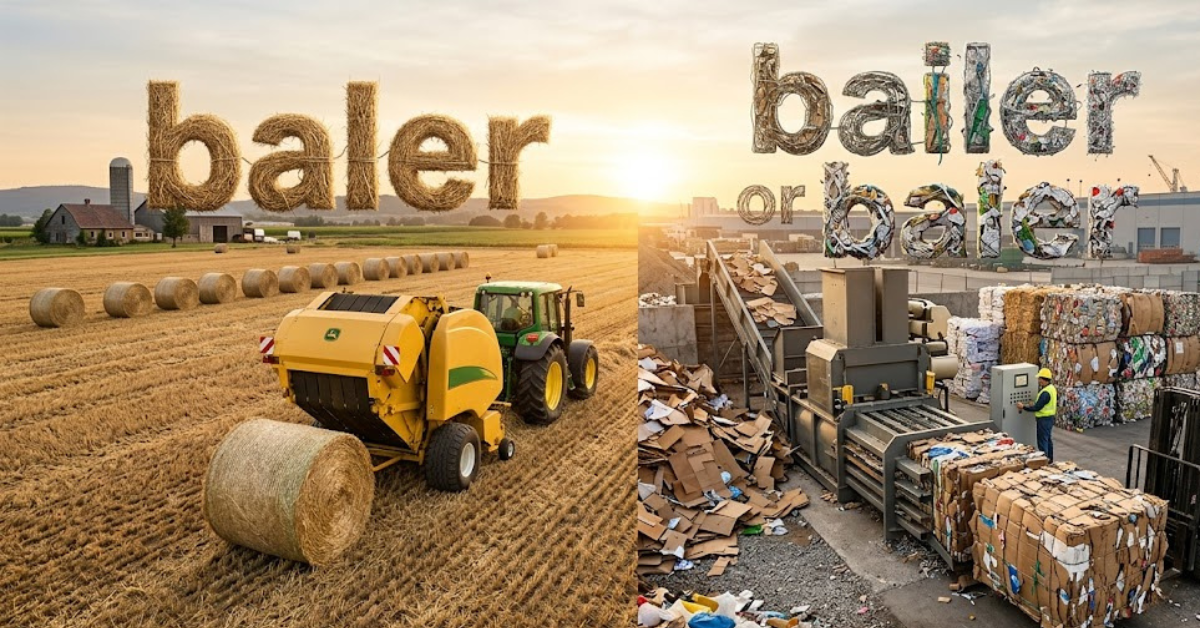
English is full of words that look and sound alike but have entirely different meanings. One pair that often causes confusion is bailer or baler. At first glance, they appear nearly identical, yet they refer to completely different objects and actions.
If you’ve ever wondered whether to use baler or bailer, you’re not alone. The distinction matters, especially in industries such as agriculture, recycling, boating, and law. Using the wrong term can create misunderstandings and make professional writing appear less accurate.
In this guide, we’ll break down the meaning of each word, explain when to use them, provide practical examples, and help you remember the difference for good.
Bailer or Baler: What’s the Main Difference?
The primary difference is simple:
- Baler is a machine or device used to compress materials into bales.
- Bailer is a person or tool involved in bailing, such as removing water from a boat or providing bail in legal situations.
Although the words sound similar, their meanings are unrelated.
Quick Comparison
| Word | Meaning |
| Baler | A machine that compresses materials into bales |
| Bailer | A person or tool used for bailing or someone who provides bail |
In most agricultural and recycling contexts, baler is the correct term.
Baler Meaning: What Is a Baler?
The baler meaning most people encounter relates to agriculture and waste management.
A baler is a machine designed to compress loose materials into compact bundles called bales. These bales are easier to handle, transport, store, and recycle.
Common Types of Balers
Agricultural Balers
Farmers use balers to compress:
- Hay
- Straw
- Cotton
- Silage
The machine gathers loose material and forms it into tightly packed bales.
Recycling Balers
Recycling facilities use balers to compress:
- Cardboard
- Paper
- Plastic
- Aluminum cans
- Textile waste
Compressed materials take up less space and reduce transportation costs.
Example Sentences
- The farmer purchased a new baler for the hay season.
- The recycling center installed an industrial baler.
- The cardboard baler reduced storage requirements significantly.
What Is a Bailer?
A bailer generally refers to a person or device that performs the act of bailing.
Depending on the context, the meaning changes slightly.
Bailer in Boating
In boating, a bailer is a container or device used to remove water from a boat.
Examples include:
- Buckets
- Scoops
- Manual water-removal tools
Example
- The sailor used a bailer to remove water after the storm.
Bailer in Legal Contexts
In legal terminology, a bailer can refer to a person who provides bail or guarantees another person’s appearance in court.
Example:
- The defendant’s bailer posted the required bond.
This usage is less common in everyday conversation but still exists in legal contexts.
Baler or Bailer in Agriculture?
This is where many spelling mistakes occur.
When discussing:
- Hay equipment
- Farming machinery
- Straw processing
- Crop harvesting
The correct word is always:
Baler
Examples:
- Round baler
- Square baler
- Hay baler
- Automatic baler
Incorrect:
Hay bailer
Straw bailer
Because the machine creates bales, it is called a baler.
Why People Confuse Baler and Bailer
Several factors contribute to the confusion.
Similar Pronunciation
In many accents, the words sound nearly identical.
Similar Spelling
The only difference is the placement of the letters “i” and “l.”
Lack of Industry Familiarity
People unfamiliar with farming or recycling equipment may assume both spellings are interchangeable.
They are not.
Types of Balers Used Today
Understanding the different kinds of balers can make the term easier to remember.
Round Balers
Round balers create large cylindrical bales commonly seen in farm fields.
Benefits include:
- Easy outdoor storage
- Efficient handling
- Weather resistance
Square Balers
Square balers produce rectangular bales.
Advantages include:
- Easier stacking
- Better storage efficiency
- Convenient transportation
Vertical Balers
Used primarily in recycling facilities.
They compress:
- Cardboard
- Plastic
- Paper products
Horizontal Balers
These industrial machines process large volumes of recyclable materials and waste.
Industries That Use Balers
Balers are important in many industries beyond farming.
Agriculture
Used for:
- Hay production
- Straw collection
- Crop residue management
Recycling
Used to process:
- Cardboard
- Plastic bottles
- Paper waste
Manufacturing
Used to reduce waste volume and improve storage efficiency.
Distribution Centers
Used for managing packaging waste.
How to Remember Baler vs Bailer
A simple memory trick can help.
Baler = Bale
Both words contain the root “bale.”
- Bale = compressed bundle
- Baler = machine that makes bales
Bailer = Bail
Think of:
- Bailing water from a boat
- Posting bail in court
This connection makes the correct spelling easier to remember.
Common Mistakes to Avoid
Mistake #1: Writing Hay Bailer
The farmer bought a new hay bailer.
The farmer bought a new hay baler.
Mistake #2: Using Baler for Water Removal
The sailor grabbed a baler to remove water.
The sailor grabbed a bailer to remove water.
Mistake #3: Assuming Both Spellings Mean the Same Thing
Although they sound alike, the meanings are entirely different.
Baler vs Bailer: Side-by-Side Comparison
| Feature | Baler | Bailer |
| Agriculture | Yes | No |
| Recycling | Yes | No |
| Creates bales | Yes | No |
| Removes water | No | Yes |
| Legal bail context | No | Yes |
| Industrial machinery | Yes | No |
Real-World Examples
Baler Examples
- The hay baler processed hundreds of acres.
- The recycling baler compacted cardboard into dense blocks.
- A modern baler can significantly reduce waste volume.
Bailer Examples
- Every small boat should carry a bailer.
- The bailer helped remove water during the storm.
- The defendant’s bailer guaranteed payment of the bond.
Frequently Asked Questions
Is it baler or bailer?
It depends on the context. A machine that compresses materials into bales is a baler, while a water-removal tool or someone who posts bail is a bailer.
What is the baler meaning?
A baler is a machine that compresses materials such as hay, cardboard, paper, or plastic into compact bales.
Is a hay machine called a baler or bailer?
The correct term is baler.
What does a bailer do?
A bailer removes water from a boat or refers to a person who provides bail in legal situations.
Why do people confuse baler and bailer?
The words sound similar and differ by only one letter, making spelling mistakes common.
What industries use balers?
Balers are widely used in agriculture, recycling, manufacturing, warehousing, and waste management.
What is a cardboard baler?
A cardboard baler is a recycling machine that compresses cardboard into dense bales for storage and transportation.
Conclusion
When comparing bailer or baler, the distinction becomes clear once you understand their meanings. A baler is a machine used to compress materials into bales, making it a common tool in farming, recycling, and waste management. A bailer, on the other hand, is associated with removing water from boats or providing bail in legal matters.
If you’re discussing hay equipment, recycling machinery, or industrial waste processing, baler is almost certainly the correct choice. Remember the simple rule: a baler makes bales, while a bailer handles bail or bailing.
Understanding the difference between baler or bailer can help you communicate more accurately and confidently, whether you’re writing about agriculture, recycling, boating, or legal topics.