
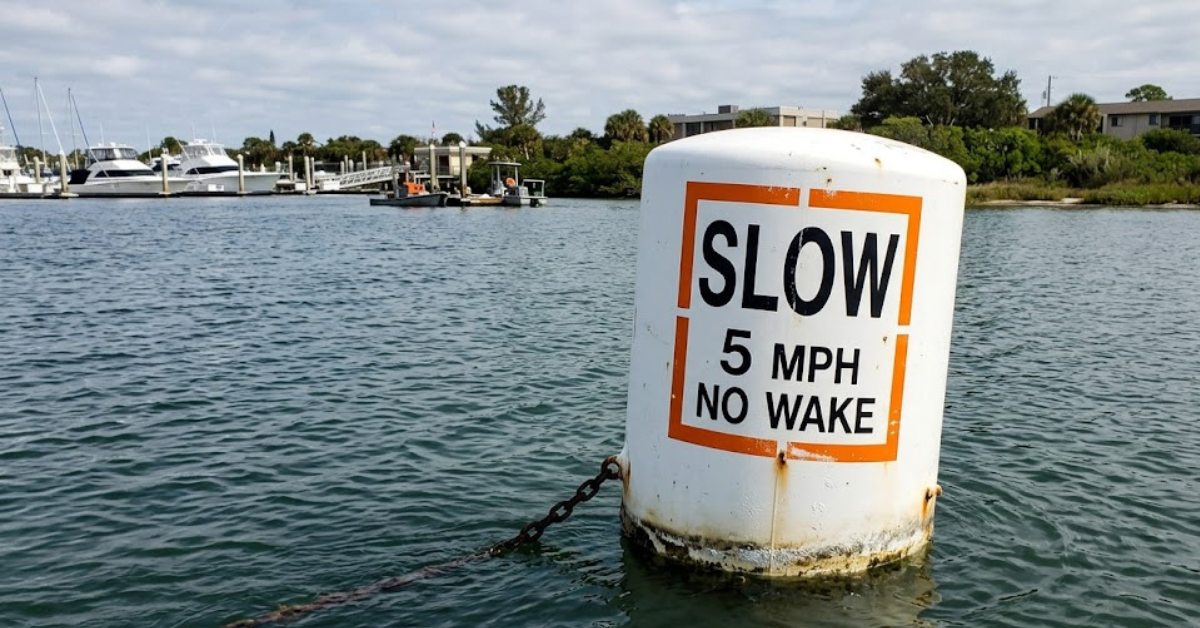
If you’re learning boating rules or studying for a boating safety exam, you might come across this question: “You see a white buoy with an orange square and black lettering. What does this buoy tell you?”
This type of buoy is part of the standard U.S. Aids to Navigation (ATON) system, and it’s actually easier to understand than it looks.
Let’s break it down clearly so you know exactly what it means when you see one on the water.
What this buoy looks like in simple terms
A white buoy with an orange square and black lettering is a regulatory marker.
It typically has:
- A white body
- An orange square symbol
- Black text or symbols inside or near the square
These buoys are designed to give rules and safety instructions to boaters.
What the orange square means
The key detail is the orange square.
In boating navigation symbols:
- Orange shapes = regulatory information
- A square specifically = information or directions
So an orange square tells you:
“Pay attention to the written information on this buoy.”
Unlike danger buoys or navigation channel markers, this one is not marking water depth or hazards. It’s giving you instructions.
What the black lettering tells you
The black lettering inside or near the orange square explains the specific rule or instruction.
This could include things like:
- Speed limits
- Restricted zones
- No wake zones
- Boat operation rules
- Safety warnings
For example, you might see messages like:
- “NO WAKE”
- “SLOW SPEED”
- “SWIM AREA”
- “BOATS KEEP OUT”
So what does this buoy tell you overall?
When you combine both parts:
A white buoy with an orange square and black lettering tells you there is a regulatory instruction you must follow while boating in that area.
In simple terms:
- It is not optional information
- It is a rule you are expected to obey
- It is meant to keep boating areas safe
Why these buoys are important for boaters
These buoys help prevent accidents and confusion on the water.
They are used to:
- Control boat speed in crowded areas
- Protect swimmers and divers
- Mark restricted or protected zones
- Improve overall water safety
Ignoring them can lead to:
- Fines or penalties
- Dangerous boating conditions
- Collisions or accidents
How to respond when you see this buoy
If you come across one while boating:
1. Slow down and observe
Check what the message says before proceeding.
2. Read the instruction carefully
The black text gives you the exact rule.
3. Follow the rule immediately
Whether it says “No Wake” or “Restricted Area,” comply right away.
Common mistakes boaters make
Many beginners confuse this buoy with:
- Warning buoys (which indicate hazards)
- Channel markers (which guide navigation paths)
- Anchoring buoys (used for mooring)
But this one is different—it is rule-based, not directional or hazard-based.
FAQs
What does a white buoy with orange markings mean?
It means there is a regulatory instruction you must follow, such as speed limits or restricted zones.
Is the orange square buoy a warning buoy?
No, it is a regulatory marker, not a hazard warning.
Do I have to follow instructions on this buoy?
Yes, the instructions are enforceable boating rules.
What kind of rules are shown on these buoys?
They may include no wake zones, speed limits, or restricted access areas.
Are these buoys found everywhere?
Yes, they are part of the standard U.S. boating navigation system.
Conclusion
So, when you see a white buoy with an orange square and black lettering, it’s not just a marker—it’s a direct instruction from the boating safety system.
It tells you:
- There is an important rule in that area
- You must read and follow the instruction
- It is designed to keep waterways safe for everyone
Understanding these buoys makes boating safer, easier, and more confident—especially if you’re still learning navigation rules.
If you want, I can also break down all buoy colors and shapes in a simple cheat sheet for exams or boating practice.