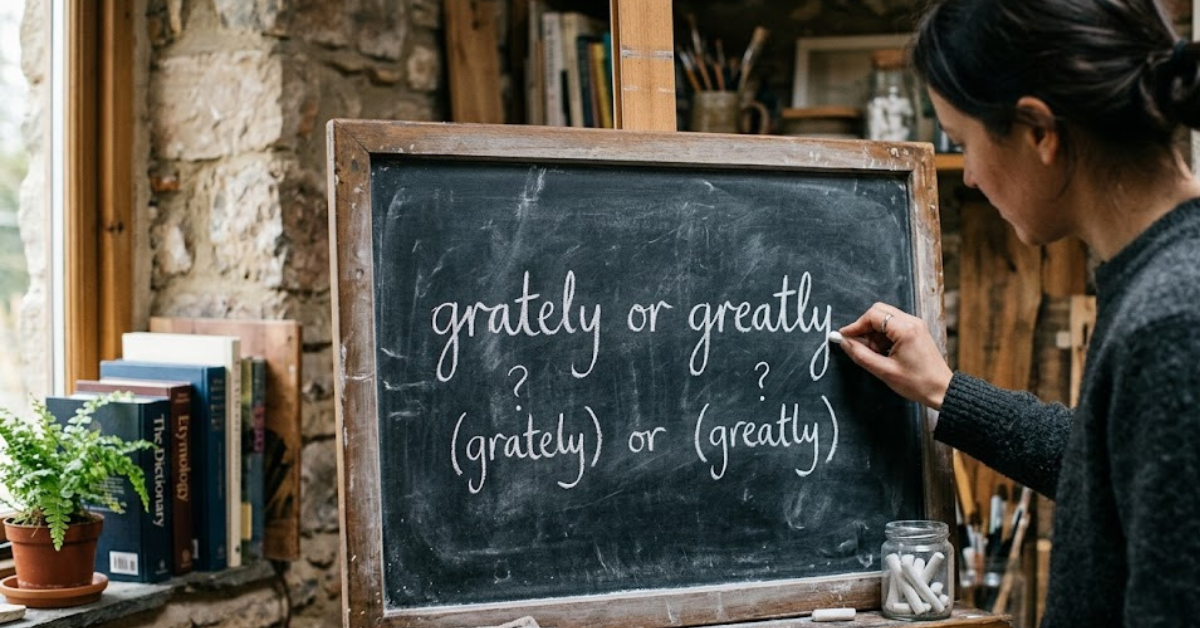
Let’s clear this up right away: “grately” is not a correct English word. If you’ve ever wondered about grately or greatly, the correct spelling you’re looking for is greatly.
This is a common mistake because the words “great” and “grateful” exist, which makes “grately” seem believable. But in proper English usage, “greatly” is the only correct form—and it’s used more often than you might think.
What Does “Greatly” Mean?
Definition:
Greatly is an adverb that means:
- To a large extent
- Very much
- Significantly
Examples:
- Your help is greatly appreciated.
- She was greatly influenced by her mentor.
- The changes have greatly improved performance.
Key takeaway:
“Greatly” describes how much something happens or matters.
Why “Grately” Is Incorrect
The confusion around grately or greatly usually comes from mixing up spelling patterns.
Here’s the issue:
- “Great” + “-ly” → greatly (correct)
- “Grate” + “-ly” → grately (incorrect in this context)
Even though “grate” is a real word (like a kitchen grater), “grately” is not recognized as a standard English adverb.
Greatly Appreciated or Grately Appreciated?
This is one of the most searched phrases—and the answer is simple:
Greatly appreciated — correct
Grately appreciated — incorrect
Why?
“Greatly” properly modifies the verb “appreciated,” showing degree.
Example:
- Your support is greatly appreciated.
- Your support is grately appreciated.
Grately vs Greatly: Quick Comparison
| Word | Correct? | Meaning |
| Grately | No | Not a standard word |
| Greatly | Yes | To a large extent |
Common Situations Where “Greatly” Is Used
You’ll see “greatly” in everyday writing, especially in formal or polite contexts.
1. Expressing Gratitude
- Your time is greatly appreciated.
- I greatly value your input.
2. Showing Impact
- The update greatly improved performance.
- His speech greatly influenced the audience.
3. Emphasizing Degree
- Prices have greatly increased.
- The experience greatly shaped her career.
Easy Trick to Remember the Correct Spelling
If you’re unsure about grately or greatly, use this simple trick:
Think of the word “great”
Add “-ly” → greatly
If the base word isn’t “great,” it’s probably wrong.
Common Mistakes to Avoid
Here are a few errors people often make:
- Writing “grately appreciated” in emails
- Assuming “grately” is a shortcut spelling
- Confusing it with “grateful”
Pro tip:
- Grateful = feeling thankful
- Greatly = describing extent
Why This Matters in Writing
Using the correct form in grately or greatly isn’t just about grammar—it affects:
- Professional communication
- Academic writing
- First impressions (especially in emails or resumes)
Small spelling mistakes can make polished writing look careless.
FAQs
1. Is “grately” a real word?
No, “grately” is not a correct or standard English word.
2. What is the correct spelling: grately or greatly?
The correct spelling is greatly.
3. Is it “greatly appreciated” or “grately appreciated”?
“Greatly appreciated” is correct.
4. What does “greatly” mean?
It means to a large extent or very much.
5. Why do people write “grately”?
It’s usually a spelling mistake caused by confusion with words like “grateful.”
Conclusion
When it comes to grately or greatly, the answer is clear: always use “greatly.” “Grately” may look convincing, but it’s simply not correct in standard English.
Whether you’re writing an email, an essay, or a social media post, using “greatly” ensures your message sounds polished and professional. And the next time you type “greatly appreciated,” you’ll know you’ve got it exactly right.