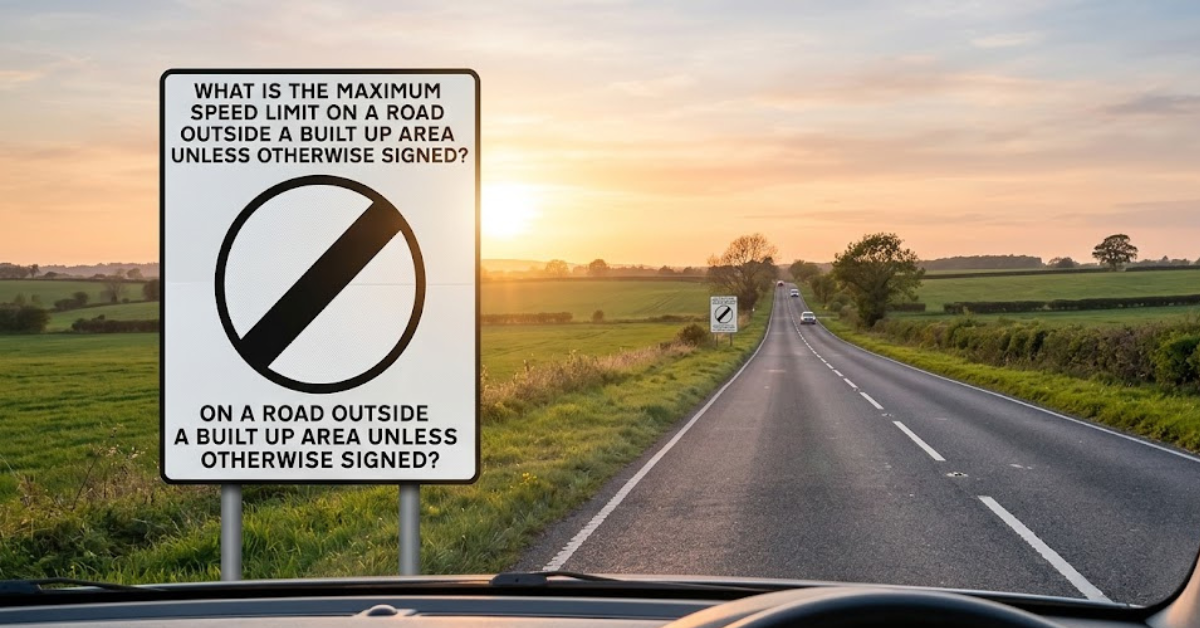
If you’ve ever taken a drive through the countryside or open highways, you’ve probably asked: what is the maximum speed limit on a road outside a built up area unless otherwise signed? It’s a key driving rule that many learners and even experienced drivers sometimes forget.
Speed limits outside built-up areas are designed to balance travel efficiency with road safety. But here’s the important part—these limits are not the same everywhere, and they can change depending on your country, road type, and signage.
Let’s break it down clearly so you always know what speed is legal and safe when you leave urban roads behind.
Understanding “Outside Built-Up Areas”
Before talking about speed limits, it helps to understand what “outside built-up areas” means.
A built-up area usually refers to:
- Cities and towns
- Residential zones
- Areas with frequent street lighting
- Roads with homes, shops, or pedestrian activity
Outside these areas, roads are typically:
- Rural roads
- Country lanes
- Open highways (in some cases)
These roads often have fewer pedestrians but may include sharper turns, wildlife crossings, or changing road conditions.
What Is the Maximum Speed Limit Outside Built-Up Areas?
So, what is the maximum speed limit on a road outside a built up area unless otherwise signed?
In many countries (including the UK system as a reference standard):
- Single carriageway roads: 60 mph (96 km/h)
- Dual carriageways/motorways: 70 mph (112 km/h)
These are default national speed limits unless road signs indicate otherwise.
National Speed Limit is the term used to describe these standard limits when no specific speed signs are posted.
Why Speed Limits Change Outside Cities
Even though roads outside towns may look open and empty, several safety factors influence speed limits:
1. Road design
- Narrow lanes
- Sharp bends
- Uneven surfaces
2. Visibility conditions
- Hills and curves reduce reaction time
- Weather can change quickly
3. Unexpected hazards
- Farm vehicles
- Wildlife crossings
- Pedestrians in rural areas
How to Identify the Correct Speed Limit
Drivers should never rely only on assumptions.
Always check for:
- Circular speed limit signs
- Road markings
- National speed limit signs (black diagonal stripe)
If no specific limit is shown, the default national speed rules apply.
Common Mistakes Drivers Make
Many drivers misunderstand speed limits outside built-up areas.
Mistake 1: Driving too fast on rural roads
Just because a road is empty doesn’t mean it’s safe at high speed.
Mistake 2: Ignoring changing road signs
Speed limits can drop suddenly near villages or bends.
Mistake 3: Assuming all country roads allow 60 mph
Some rural roads are much slower due to safety risks.
Safe Driving Tips for Outside Built-Up Areas
Even if the legal limit allows higher speeds, safety should guide your driving.
Best practices:
- Slow down on blind corners
- Watch for animals crossing
- Keep extra stopping distance
- Adjust speed for rain or fog
- Stay alert for slow-moving vehicles
Why “Unless Otherwise Signed” Matters
The phrase “unless otherwise signed” is extremely important.
It means:
- Road signs override default speed limits
- Temporary limits (roadworks, weather conditions) must be followed
- Local authorities can set lower limits for safety
Ignoring posted signs is one of the most common causes of speeding penalties.
FAQs
1. What is the default speed limit outside built-up areas?
It depends on road type, but commonly 60 mph on single carriageways and 70 mph on dual carriageways in the UK system.
2. What does “built-up area” mean?
It refers to towns, cities, or roads with street lighting and frequent development.
3. Can speed limits be lower outside built-up areas?
Yes. Signs always override default limits.
4. Is it safe to always drive at the maximum limit?
Not necessarily. Road conditions often require slower speeds.
5. What happens if I exceed the speed limit?
You may face fines, penalty points, or more serious legal consequences depending on the violation.
Conclusion
So, what is the maximum speed limit on a road outside a built up area unless otherwise signed? The answer depends on the type of road, but in general, it follows national default limits unless road signs say otherwise.
The key takeaway is simple: speed limits are not just numbers—they are safety guidelines shaped by road design, environment, and risk factors. Even when the road looks open, always adjust your speed based on conditions and posted signs.
Driving safely outside built-up areas isn’t just about staying legal—it’s about staying alert, prepared, and in control at all times.