
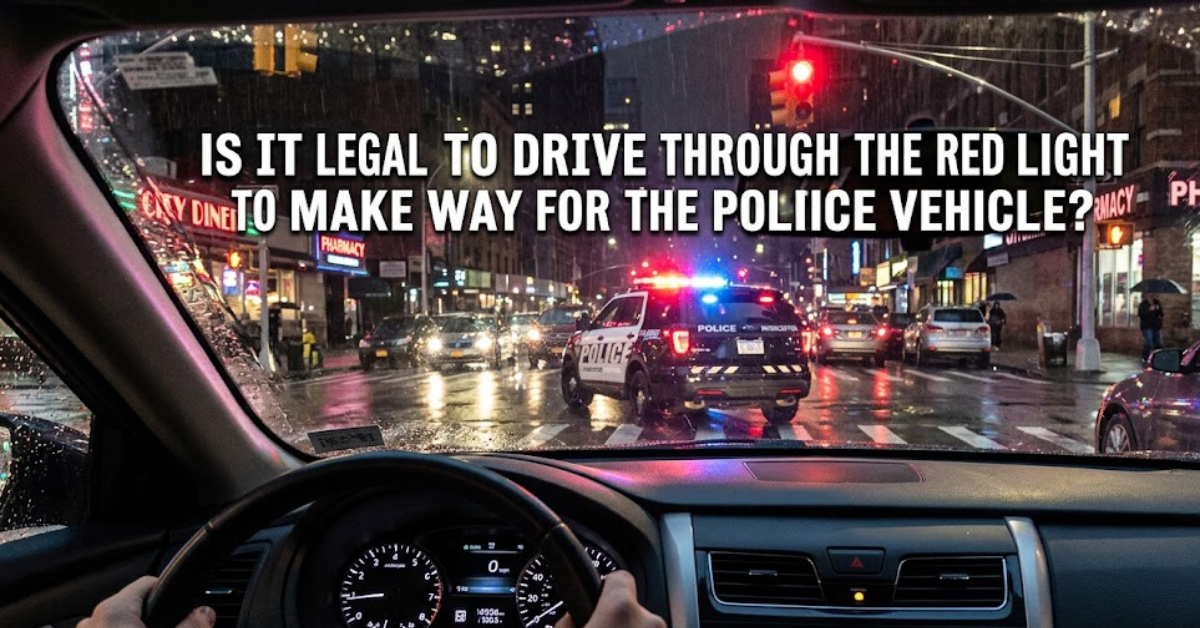
If you’ve ever been stopped at a red light with a police vehicle behind you, you’ve probably wondered: is it legal to drive through the red light to make way for the police vehicle? It’s a stressful moment—sirens are loud, pressure builds, and your instinct is to move quickly.
But traffic laws don’t always match instinct. In fact, what feels like “helping” an emergency vehicle can sometimes land you in legal trouble if done incorrectly. The rules vary by country and state, but the core idea is the same: safety comes first, and there are specific ways drivers are expected to respond.
Let’s break it down clearly so you know exactly what to do next time it happens.
Understanding the Law Around Emergency Vehicles
Traffic laws universally prioritize giving way to emergency vehicles such as police cars, ambulances, and fire trucks.
These rules are designed to ensure emergency responders can reach incidents quickly and safely.
However, that does NOT mean you are automatically allowed to break traffic laws like running a red light.
Is It Legal to Drive Through the Red Light for a Police Vehicle?
Here’s the direct answer to is it legal to drive through the red light to make way for the police vehicle?
In most cases: NO, it is not legal
Even if a police car is behind you with lights and sirens on, you are generally NOT allowed to:
- Run a red light
- Enter an intersection unsafely
- Break traffic signals blindly
Traffic laws usually require you to:
- Stay stopped at the red light
- Wait for a safe and legal opportunity to move
When You MAY Move at a Red Light
There are limited exceptions depending on local laws.
You may proceed only if:
- Police officers explicitly direct you to move
- You can safely clear the intersection without breaking other rules
- Traffic control is being actively managed by law enforcement
If an officer is physically signaling you forward, their instruction overrides the traffic signal.
What You SHOULD Do Instead (Safe Procedure)
When a police vehicle approaches behind you:
Step 1: Stay calm
Do not panic or make sudden movements.
Step 2: Assess your position
- If you are at a red light, stay stopped
- Do not enter the intersection unless legally permitted
Step 3: Create space safely
If possible:
- Move slightly forward within your lane
- Pull to the side once traffic allows
- Clear intersections only when safe and legal
Step 4: Follow the “yield rule”
You are required to yield to emergency vehicles by:
- Pulling over when possible
- Not blocking their path
- Allowing them to pass safely
Why Running a Red Light Is Dangerous (Even for Emergencies)
Even with good intentions, running a red light can create serious risks:
1. Cross-traffic collisions
Other drivers may still have a green light.
2. Reduced visibility
Emergency vehicles often move unpredictably at intersections.
3. Legal consequences
You could face:
- Traffic fines
- Points on your license
- Liability in case of an accident
Key Traffic Rule to Remember
The core principle in most traffic codes is simple:
You must yield to emergency vehicles—but not violate traffic signals unless explicitly instructed or absolutely safe.
This balance keeps both you and emergency responders safe.
Common Misconceptions
“I must move immediately no matter what”
False. Safety and legality come first.
“Blocking the police is illegal so I must break the light”
Incorrect. You must yield, but not break signals unlawfully.
“Emergency vehicles always expect you to move forward”
Not at intersections—drivers often should stay put until it’s safe.
FAQs
1. Can I get a ticket for running a red light for a police car?
Yes. Unless you were directed by an officer or acted under specific legal exception.
2. Should I pull into the intersection to let police pass?
No. You should avoid entering intersections unless it is safe and legal.
3. What if the police car is directly behind me at a red light?
Stay stopped. Move only when a safe, legal path is available.
4. Do laws differ by country or state?
Yes, but most follow the same principle: yield without violating traffic signals.
5. What if I accidentally block an emergency vehicle?
Move safely as soon as possible once you can do so without breaking traffic rules.
Conclusion
So, is it legal to drive through the red light to make way for the police vehicle? In most cases, the answer is no. While you are required to yield to emergency vehicles, you are not generally allowed to break traffic signals like running a red light unless specifically directed by law enforcement.
The safest approach is simple: stay calm, remain stopped, and only move when it is both legal and safe. Understanding this not only keeps you out of trouble—it also ensures emergency responders can do their job efficiently without creating additional risks on the road.