
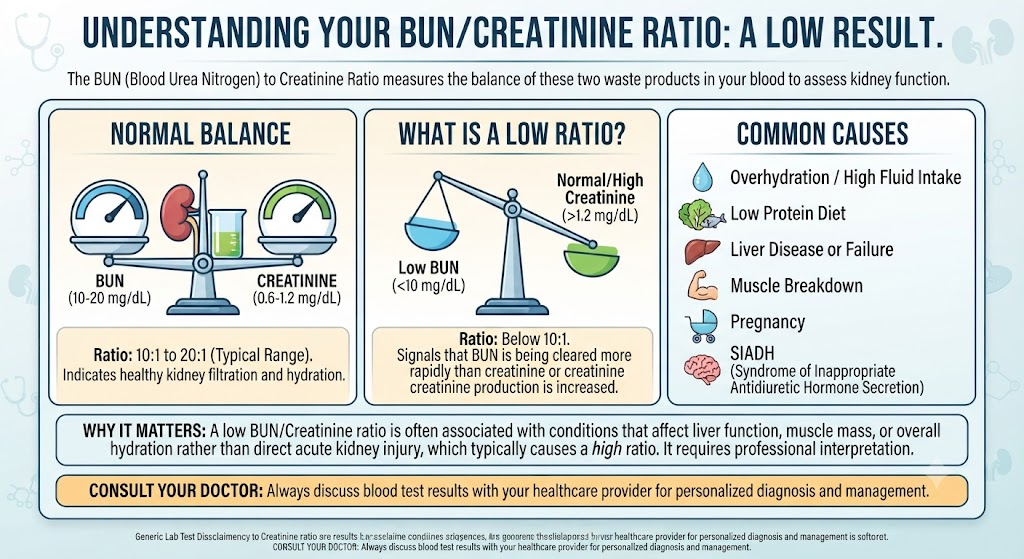
Have you ever looked at your blood test results and felt confused by all the numbers? One common test involves your kidneys. It looks at two things: BUN (Blood Urea Nitrogen) and creatinine. Your doctor often compares these two levels to create a ratio. Think of it like a balance scale. This ratio helps your doctor see how well your kidneys are filtering waste from your blood. When this balance shifts, it gives important clues about your health. Most of the time, we look for a normal range. However, sometimes you might see that your BUN/Creatinine Ratio Low result is noted on your report.
Why Does a Low Ratio Happen?
A bun/creatinine ratio low result often means the balance between these two substances has tipped. Usually, this happens because the BUN level is lower than expected. Your body makes urea when it breaks down protein. If you are not eating much protein, your BUN levels might drop. Also, if you have a lot of muscle mass, your creatinine levels might be higher than average. This can make the ratio look lower than normal. It is rarely a cause for immediate panic, but it is a signal that your body is processing things differently. Always consider what you ate before the test.
The Link Between Protein and Your Results
What you eat has a big impact on your lab work. If you follow a very low-protein diet, your liver might not produce as much urea. This causes your BUN to drop. When your BUN drops, your bun/creatinine ratio low reading becomes more likely. People who eat mostly plants or those avoiding meat often see this. While eating healthy is great, it changes how your blood work looks. Your doctor needs to know your diet habits to read these numbers correctly. Never change your diet just to “fix” a number without asking a professional for advice first.
Understanding Muscle Mass and Creatinine
Creatinine comes from your muscles. If you are an athlete or someone who lifts weights, your body naturally makes more of it. Because creatinine is the bottom number in the ratio, having a high amount can make the final bun/creatinine ratio low. This does not always mean your kidneys are sick. It might just mean you are very fit! Your body is working exactly as it should. It is important to tell your medical team about your exercise habits. They can look at your physical fitness level to understand why your ratio is sitting where it is.
Liver Health and Urea Production
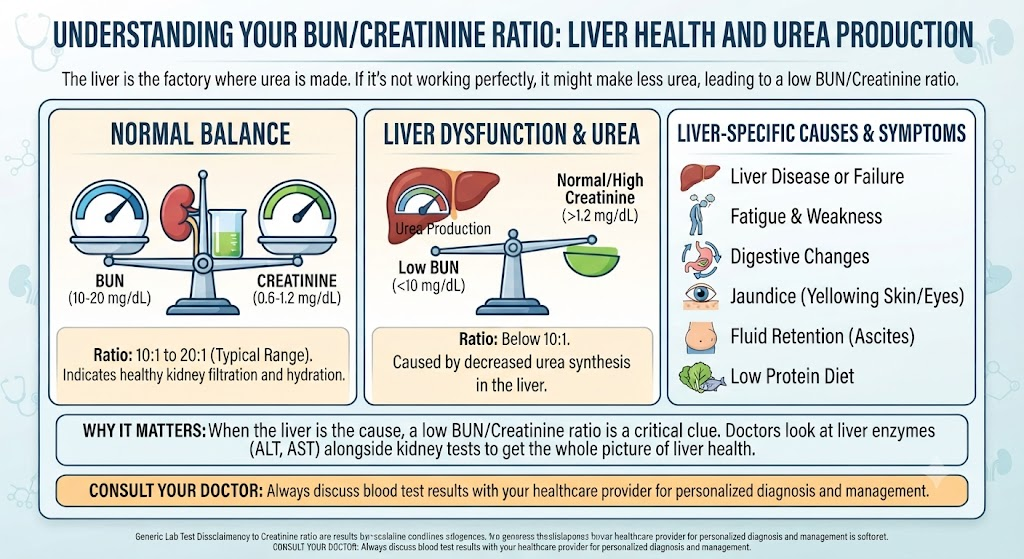
Your liver is the factory where urea is made. If your liver is not working perfectly, it might make less urea than it should. Since your blood urea nitrogen levels depend on this process, a liver issue can lead to a bun/creatinine ratio low result. This is a common reason doctors look at liver function tests alongside kidney tests. They want to see the whole picture. If the liver is the cause, you might have other symptoms like fatigue or changes in digestion. A doctor will help you figure out if your liver needs extra attention.
Could Fluid Levels Be a Factor?
Hydration changes everything in your body. When you are very well-hydrated, your blood volume increases. This can dilute the substances in your blood. Sometimes, this dilution effect influences your bun/creatinine ratio low result. It is not necessarily a sign of disease. It is often just a sign that your body is holding a healthy amount of water. However, if your levels are very low, a doctor will want to check other things. They look for signs of fluid retention or other metabolic changes to ensure everything is balanced and safe for your long-term health.
Medications and Your Blood Work
Did you know that some medicines change your test results? Certain drugs can affect how your kidneys filter waste or how your liver works. If you take medicine regularly, it might be the reason for your bun/creatinine ratio low result. Always bring a list of your vitamins, supplements, and prescriptions to your doctor. Even common over-the-counter items can shift your blood chemistry. Your healthcare provider can tell you if a specific pill is causing this change. Never stop taking a prescribed medicine without talking to them first, as your safety is the top priority.
When Should You Be Concerned?
Seeing a bun/creatinine ratio low on a report can be scary. But remember, one test is just a snapshot. It is not the whole movie of your health. Doctors usually look for trends over time. If you feel fine, have lots of energy, and are eating well, it might be nothing at all. However, if you feel weak, notice swelling, or have other symptoms, you must act. Always call your doctor to talk about the results. They have the expertise to decide if you need more tests or just a change in your daily habits.
The Role of Comprehensive Kidney Panels
A ratio is only one small part of a larger kidney panel. Doctors also look at your GFR (Glomerular Filtration Rate). This number is much more accurate for checking kidney function. If your bun/creatinine ratio low result is paired with a normal GFR, your doctor is usually less worried. They look for patterns across many different markers. By combining these tests, they build a map of your kidney health. This “people-first” approach ensures they do not jump to conclusions. It is all about looking at the big picture of your unique body.
Simple Tips for Healthy Kidneys
Keeping your kidneys happy is a great goal for everyone. Drink plenty of water throughout the day to help your system flush waste. Eat a balanced diet that includes healthy proteins in moderation. If you exercise, make sure to refuel your body with good nutrition. Staying active is fantastic, but listen to your body if you feel tired. Most importantly, keep up with your regular check-ups. Catching things early is the best way to stay healthy for a long time. Small, daily habits really do add up to a healthier, stronger version of you.

Comparison Table: Understanding Your Lab Values
| Factor | How It Affects the Ratio | Why It Matters |
| Low Protein Diet | Decreases BUN | Can lead to a lower ratio. |
| High Muscle Mass | Increases Creatinine | Often causes a lower ratio naturally. |
| High Hydration | Dilutes blood markers | May temporarily lower the result. |
| Liver Function | Reduces Urea production | Might result in a lower ratio. |
| Medication Use | Varies by drug type | Can interfere with kidney filtering. |
| GFR Level | Overall kidney performance | The most important overall health marker. |
Frequently Asked Questions
1. Is a low BUN/creatinine ratio always bad?
No. It is often harmless and can be caused by diet, fitness levels, or hydration.
2. Should I change my diet if my ratio is low?
Do not change your diet until you talk to your doctor. They need to know why your results are low first.
3. Can working out cause this result?
Yes. High muscle mass naturally increases creatinine, which can lower your ratio.
4. What is the most important kidney test?
Most doctors rely on the GFR (Glomerular Filtration Rate) to check how well kidneys are working.
5. Does drinking more water help?
Hydration is good for kidneys, but it can also dilute blood tests. Always follow your doctor’s advice on drinking.
6. When should I call my doctor about this result?
If you have other symptoms like swelling, fatigue, or changes in how you urinate, call your doctor right away.
Conclusion
Understanding your lab results does not have to be a mystery. A bun/creatinine ratio low result is often just one piece of your health puzzle. By looking at your diet, exercise, and hydration, you can often find the reason behind the numbers. Remember to stay calm, talk to your doctor, and keep focusing on healthy habits. Your kidneys do a lot of hard work for you every day! Have you ever had a confusing blood test result? Share your experience in the comments below or reach out to your primary care provider for a clear plan today.