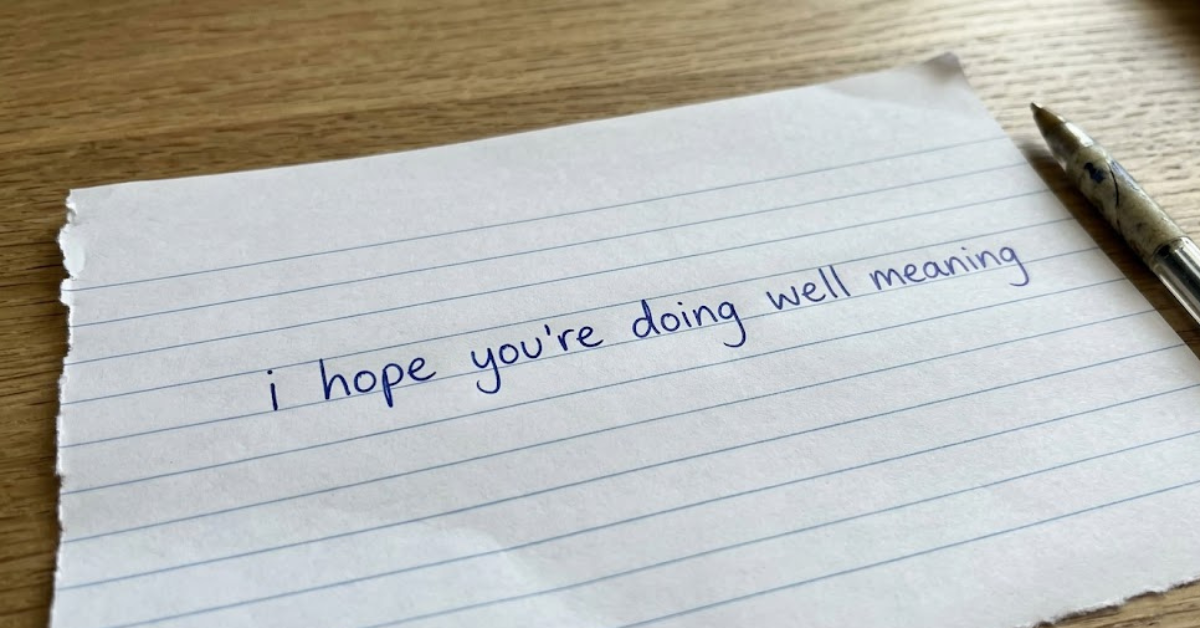
Few phrases appear in emails and messages as often as “I hope you’re doing well.” Whether you’re writing to a coworker, professor, client, or friend, chances are you’ve used this expression dozens of times without thinking much about it.
But what does “I hope you’re doing well” meaning actually imply? Is it professional? Is it polite? And why do so many people use it in emails and conversations?
In simple terms, the phrase is a warm and respectful way to ask about someone’s well-being. It shows courtesy, friendliness, and social awareness without becoming too personal.
In this article, you’ll learn:
- The true meaning of “I hope you’re doing well”
- When and where to use it
- Professional alternatives
- Grammar differences like “hope you are doing good”
- Common mistakes people make
- Better email opening examples
If you’ve ever wondered whether this phrase sounds genuine, overused, or grammatically correct, this guide breaks it all down in an easy and practical way.
What Does “I Hope You’re Doing Well” Mean?
The phrase “I hope you’re doing well” is a polite greeting that expresses goodwill toward another person.
It essentially means:
“I hope things are going well in your life right now.”
People commonly use it:
- in emails
- in text messages
- in business communication
- after not speaking for a while
- at the beginning of conversations
It’s not usually meant as a deep emotional question. Instead, it’s a friendly social opener.
Why People Use “Hope You Are Doing Well”
The phrase has become popular because it feels:
- polite
- professional
- neutral
- safe
- universally understood
In business settings, it creates a positive tone before getting to the main point of the message.
For example:
“I hope you’re doing well. I wanted to follow up regarding our meeting next week.”
This softens the transition into work-related communication.
Is “I Hope You’re Doing Well” Professional?
Yes, absolutely. It’s one of the most widely accepted professional greetings in English.
Why It Works Professionally
It:
- sounds respectful
- avoids being too casual
- creates warmth
- feels non-invasive
That’s why it appears so often in:
- emails
- LinkedIn messages
- customer service communication
- networking conversations
However, because it’s so common, some people feel it can sound repetitive or generic if overused.
Hope You Are Doing Well Meaning in Different Contexts
The phrase can slightly change in tone depending on how it’s used.
In Emails
Usually formal and polite.
Example:
“I hope you are doing well and had a great weekend.”
In Text Messages
Can sound more personal and caring.
Example:
“Hey, hope you’re doing well!”
After Someone Has Been Sick or Busy
Shows genuine concern.
Example:
“I hope you’re doing well after your surgery.”
In this context, the phrase feels more emotionally meaningful.
“Hope You Are Doing Good” vs “Hope You Are Doing Well”
This is one of the most common grammar questions people ask.
Which Is Correct?
Both are understandable, but:
- “doing well” is grammatically preferred
- “doing good” is more informal
Why?
“Well” describes how someone is doing.
So:
Hope you are doing well
I hope you’re doing well
Sound more grammatically standard.
Is “Hope You Are Doing Good” Wrong?
Not exactly.
Many native English speakers casually say:
- “Hope you’re doing good”
- “Hope things are good”
It sounds conversational and friendly, especially in American English.
However, in professional writing, “doing well” is usually better.
Common Grammar Mistake: “Hope Your Doing Good”
A very common typo is:
Hope your doing good
The correct version is:
Hope you’re doing good
or
Hope you are doing well
Why?
“You’re” = “you are”
“Your” = possession
So:
- “your doing good” is grammatically incorrect
- “you’re doing good” is correct
Better Alternatives to “I Hope You’re Doing Well”
Some people feel the phrase sounds overused. If you want variety, here are excellent alternatives.
Professional Alternatives
- I hope all is well
- I hope things are going smoothly
- I hope you’ve been well
- I trust you’re doing well
- I hope your week is going well
- I hope everything is going smoothly
These work especially well in emails.
Casual Alternatives
- Hope things are good!
- Hope you’re having a great day
- Hope life’s been treating you well
- Hope all’s good with you
These sound more relaxed and personal.
When NOT to Use “I Hope You’re Doing Well”
Even though it’s polite, there are moments where it may sound awkward.
Avoid It During Serious Situations
If someone recently experienced:
- grief
- job loss
- illness
- tragedy
A generic “hope you’re doing well” may feel disconnected.
Instead, be more thoughtful.
Better Example
“I’ve been thinking about you and hope things are getting easier.”
This feels more sincere and emotionally aware.
Does the Phrase Sound Fake?
Some people believe “I hope you’re doing well” sounds robotic because it’s used so often in professional emails.
The truth is:
- it can sound generic if copied repeatedly
- but it’s still considered polite and acceptable
The key difference is personalization.
Generic
I hope you’re doing well.
Better
I hope your new project is going well.
Specific details instantly make the message feel more authentic.
How to Make the Phrase Sound More Natural
Here are simple ways to improve it.
Add Context
Instead of:
Hope you’re doing well.
Try:
Hope your week has been going smoothly.
Mention Something Personal
I hope your move went well.
or
Hope your semester is off to a good start.
This feels warmer and more genuine.
Examples of Professional Email Openings
Here are polished ways to begin emails naturally.
Formal Example
I hope you’re doing well. I wanted to follow up regarding our discussion from last week and confirm the next steps.
Friendly Professional Example
I hope your week is going smoothly. I’m reaching out to share an update on the project timeline.
These openings sound professional without feeling cold.
Why This Phrase Became So Popular
The phrase became especially common because it’s:
- emotionally safe
- universally polite
- culturally neutral
- easy to understand
In global business communication, simple and respectful language matters.
That’s why phrases like “I hope you’re doing well” continue to dominate professional writing.
FAQs
What does “I hope you’re doing well” mean?
It’s a polite expression used to wish someone good health, happiness, or general well-being. It’s commonly used in emails and conversations.
Is “hope you are doing good” correct?
It’s understandable and commonly used in casual speech, but “hope you are doing well” is considered more grammatically standard.
Is “hope your doing good” correct?
No. The correct form is:
- “hope you’re doing good”
or - “hope you are doing well”
“Your” is possessive, while “you’re” means “you are.”
Is “I hope you’re doing well” too formal?
Not really. It works in both professional and semi-casual settings. However, some people prefer more personalized alternatives in friendly conversations.
What can I say instead of “I hope you’re doing well”?
You can say:
- Hope all is well
- Hope things are going smoothly
- Hope you’ve been well
- Hope your week is going great
These alternatives sound natural and professional.
Conclusion
Understanding “I hope you’re doing well” meaning goes beyond grammar. The phrase is really about politeness, connection, and creating a positive tone in communication. Whether you’re writing a business email, checking in with a friend, or starting a professional conversation, it remains one of the most widely accepted greetings in English.
While phrases like “hope you are doing good” are common in casual speech, “doing well” is generally the more polished and grammatically preferred version. And if you want your messages to feel more personal, adding context or choosing alternative greetings can make a big difference.
At the end of the day, people usually remember warmth and sincerity more than perfect wording. A thoughtful message—even a simple one—can go a long way.